QUALITY
From flower to jar, six steps
All of the work is done in ten days of the year, four hours of the day. This page shows what those ten days mean.
 01June — August
The corm
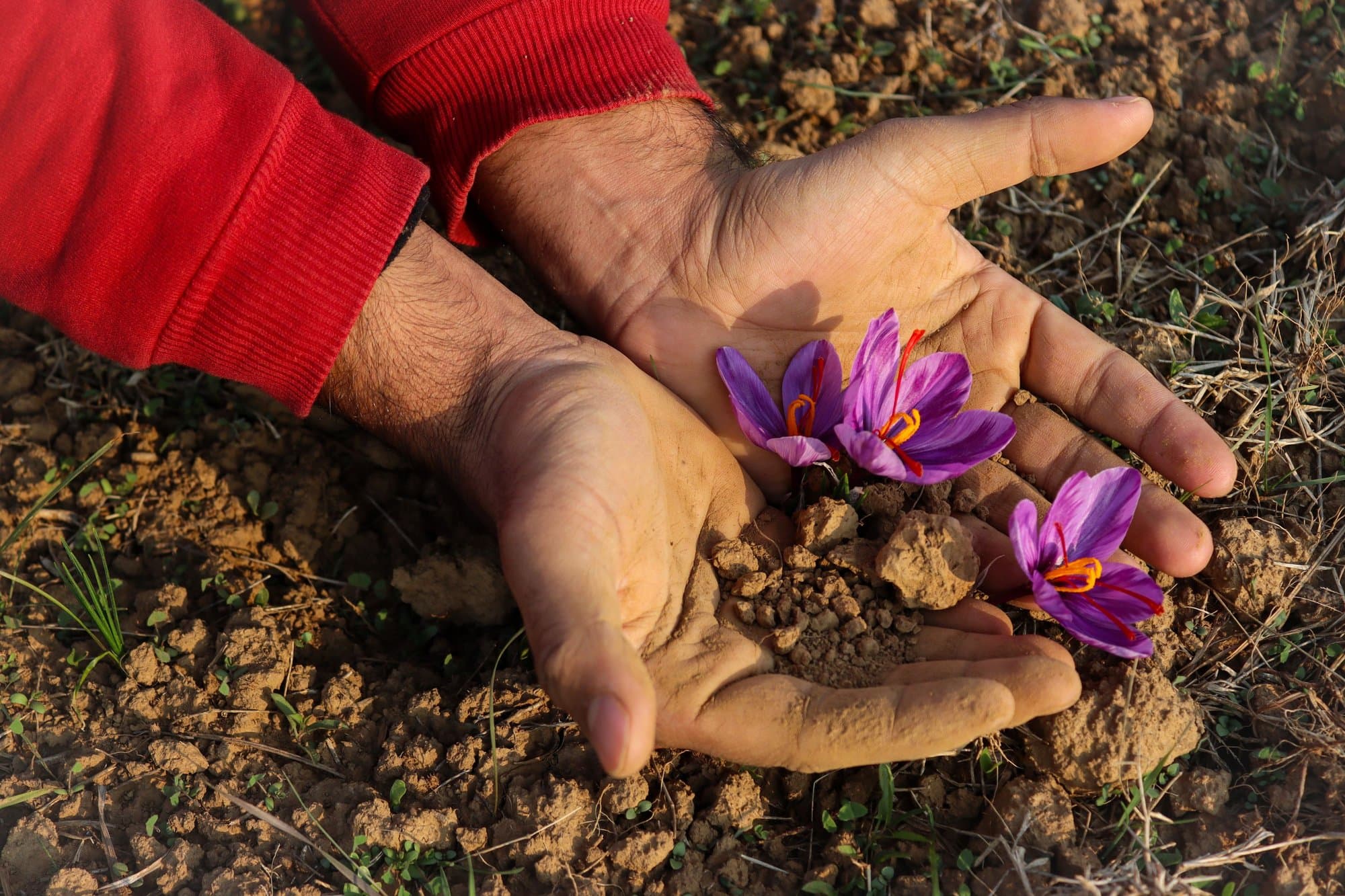
The corms are lifted in the dry summer months, sorted and kept in the shade. Diseased and small ones are set aside. Replanting is done at the end of August, while the soil is still warm — the rows are spaced wide enough to allow picking by hand.
 02November, ten days
The flower
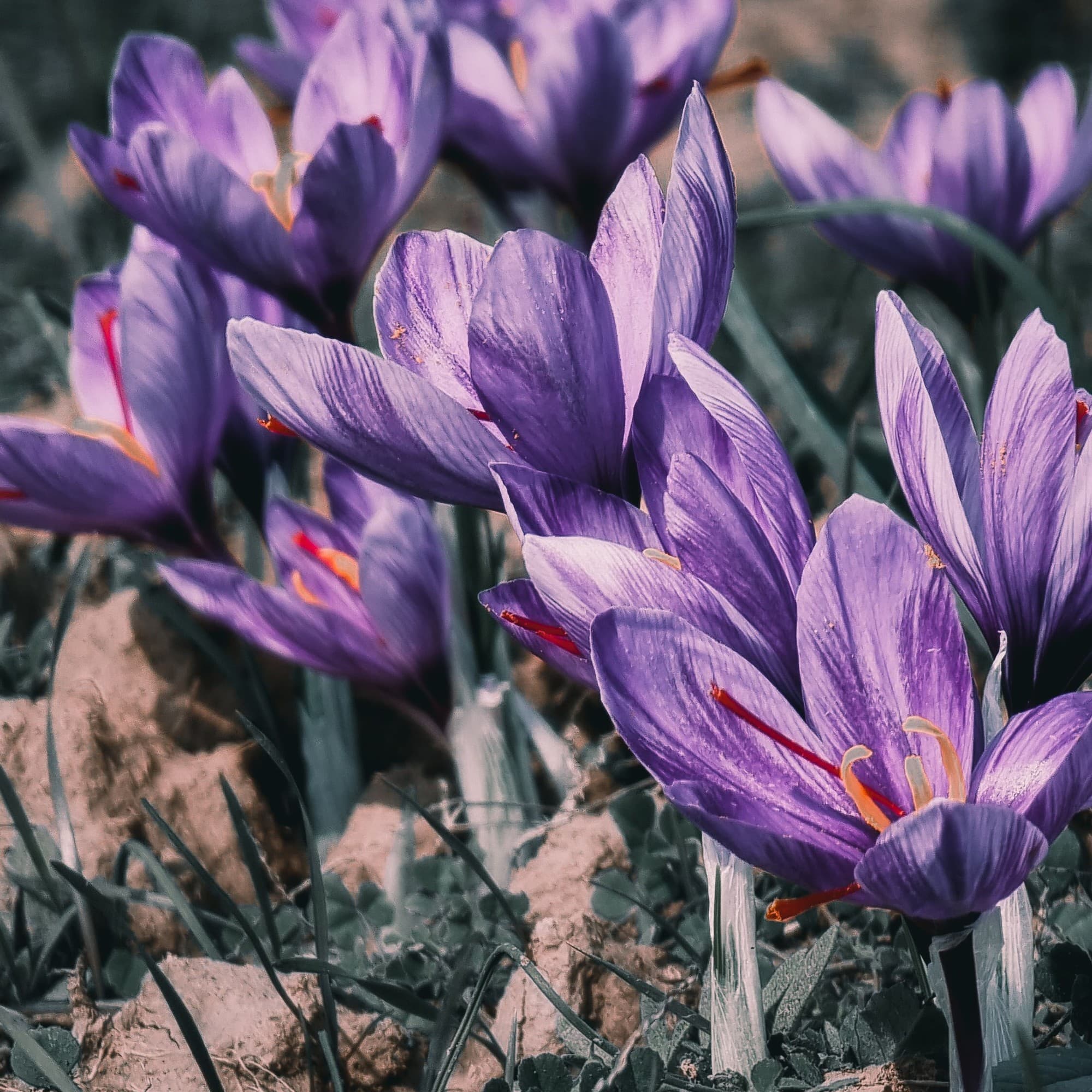
The flower opens in autumn, between night and morning, and wilts by midday. The whole season fits into ten days. So the harvest begins before sunrise: if an open flower is left into the day, the stigma loses its colour.
 03Morning, 6:00 — 10:00
Picking
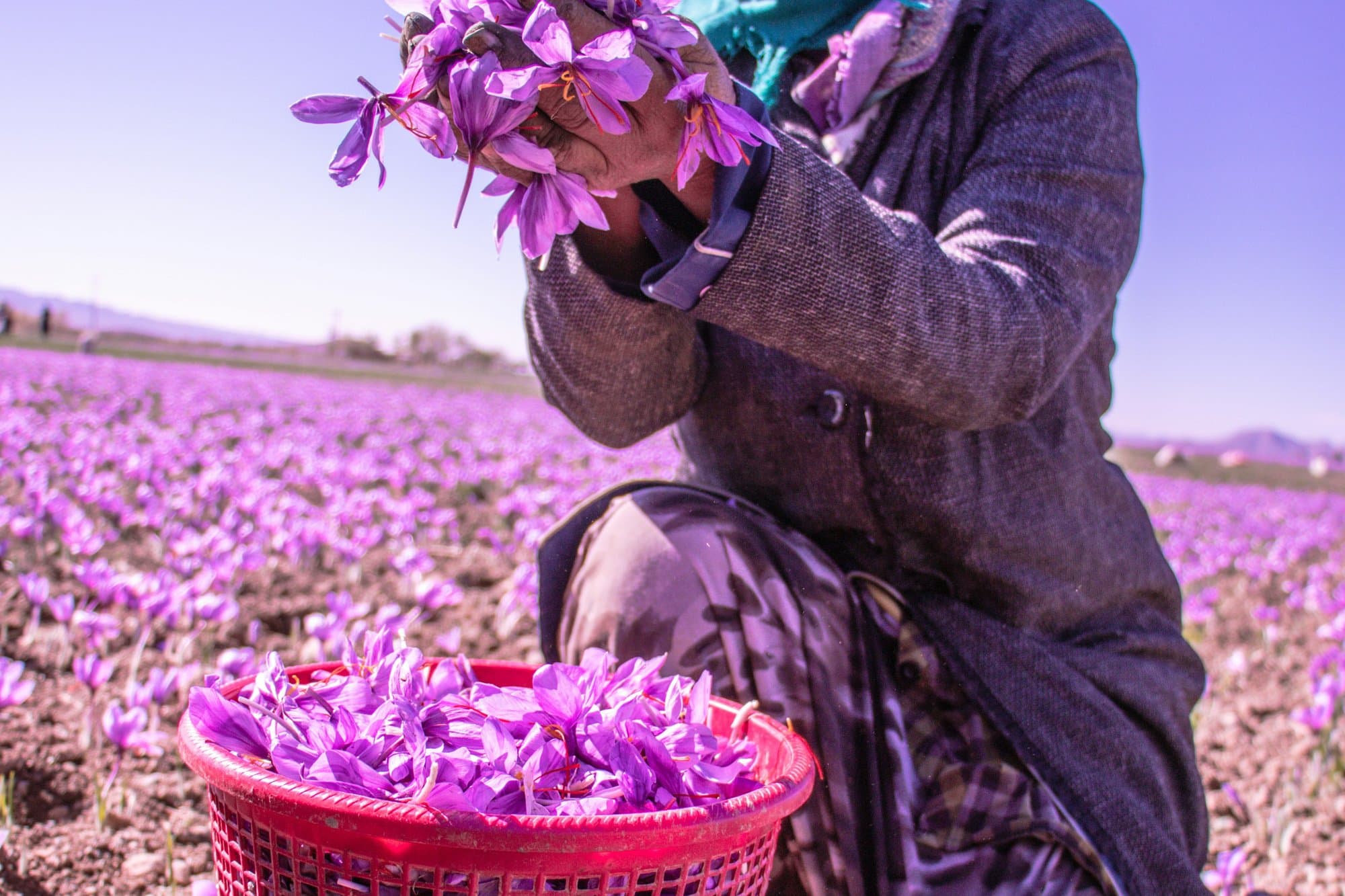
The flower is plucked by hand, at the stem, and placed in a basket. There is no machine and there cannot be — the flower is sensitive to touch and each one is taken separately. One person picks roughly two thousand flowers an hour.
 04After picking, the same day
Separating
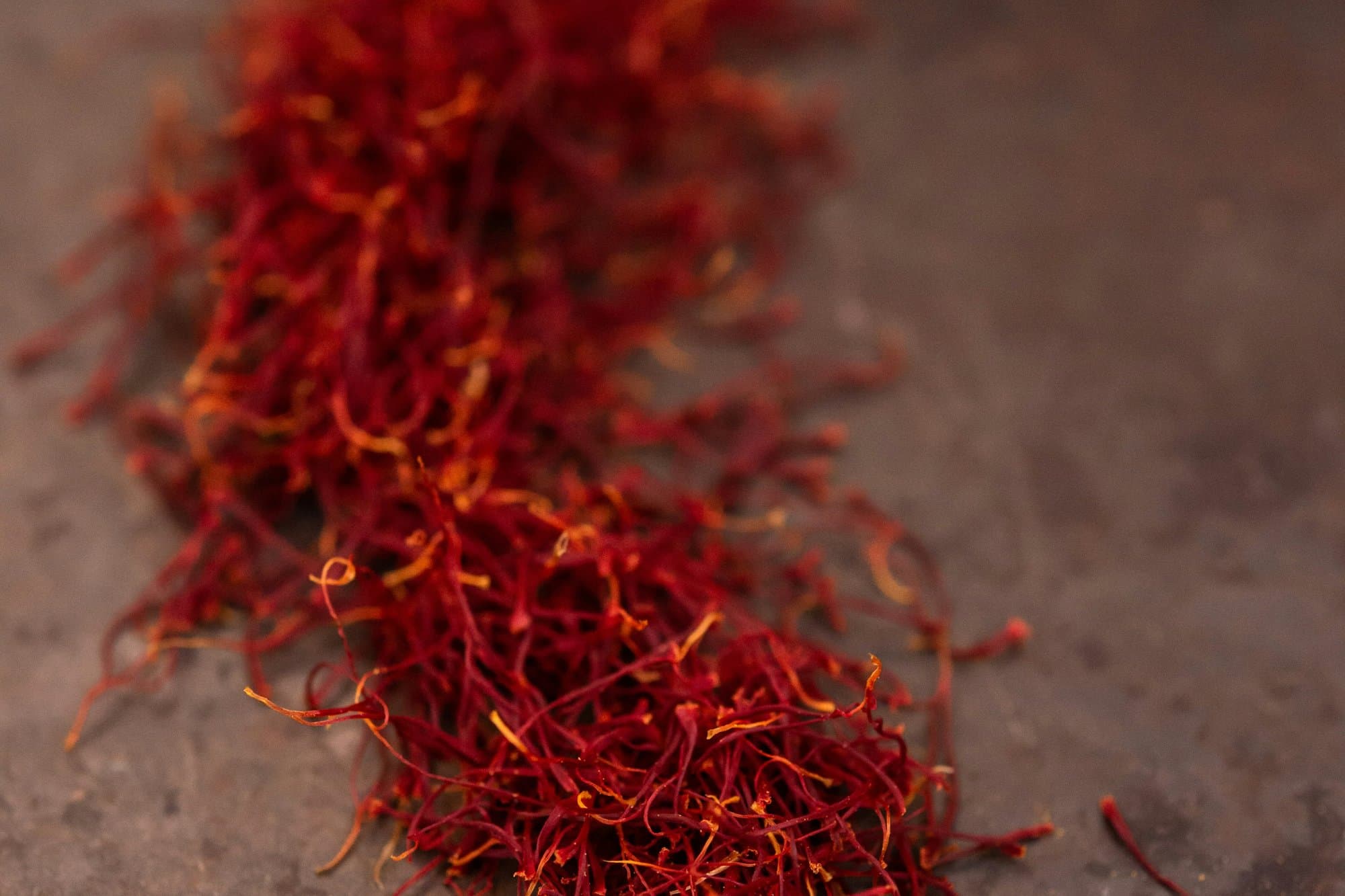
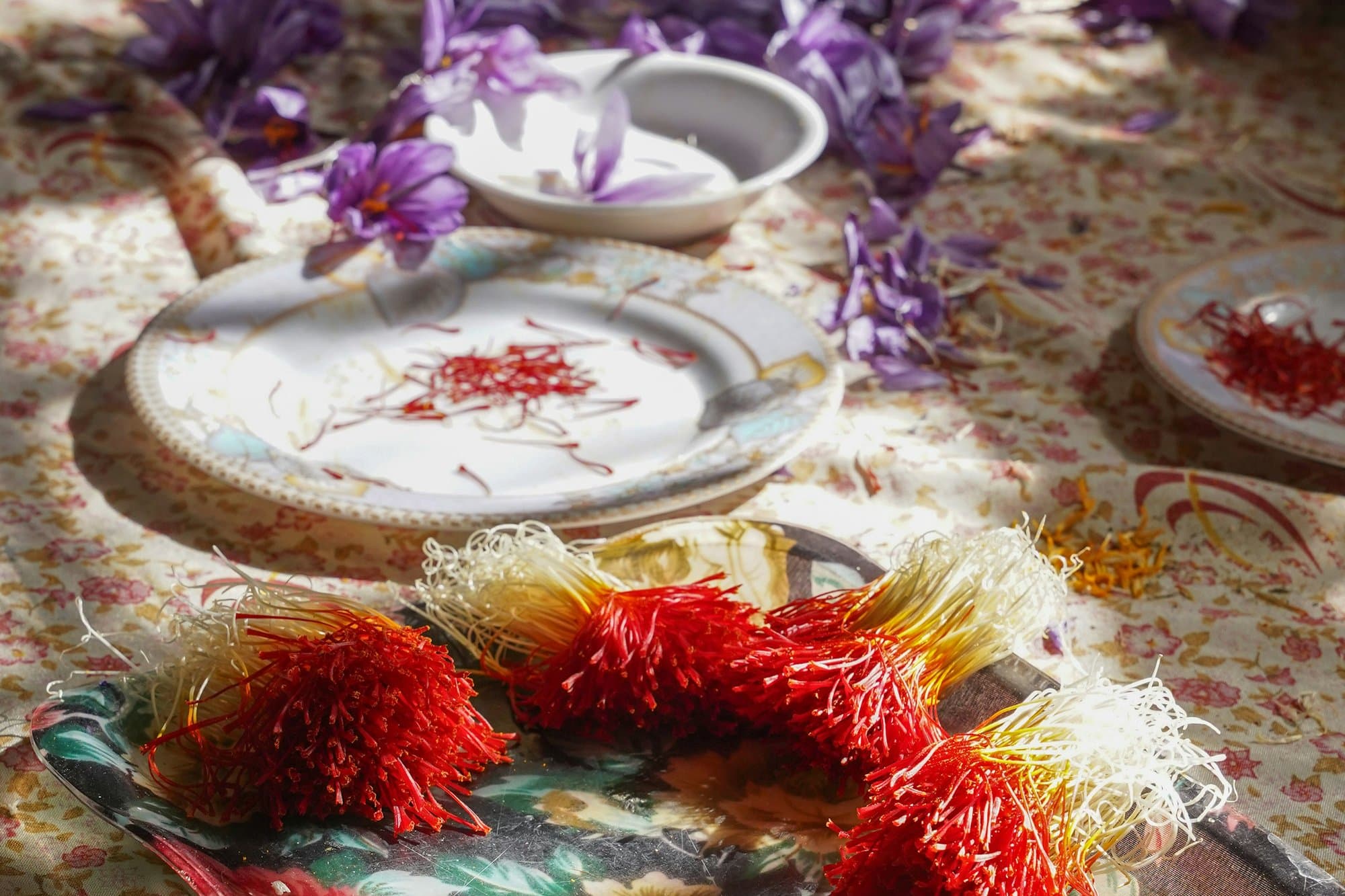
Three red stigmas are separated from each flower by hand. The yellow part — the thing that adds weight to cheap saffron — is discarded. This work must be finished the same day as picking, or the flowers heat up.
 05The same day, in the shade
Drying
The threads are dried in the shade, with natural airflow. Fast hot drying takes the weight off quickly, but takes the aroma with it. A dry thread keeps roughly a fifth of its wet weight.
 06December
Packing
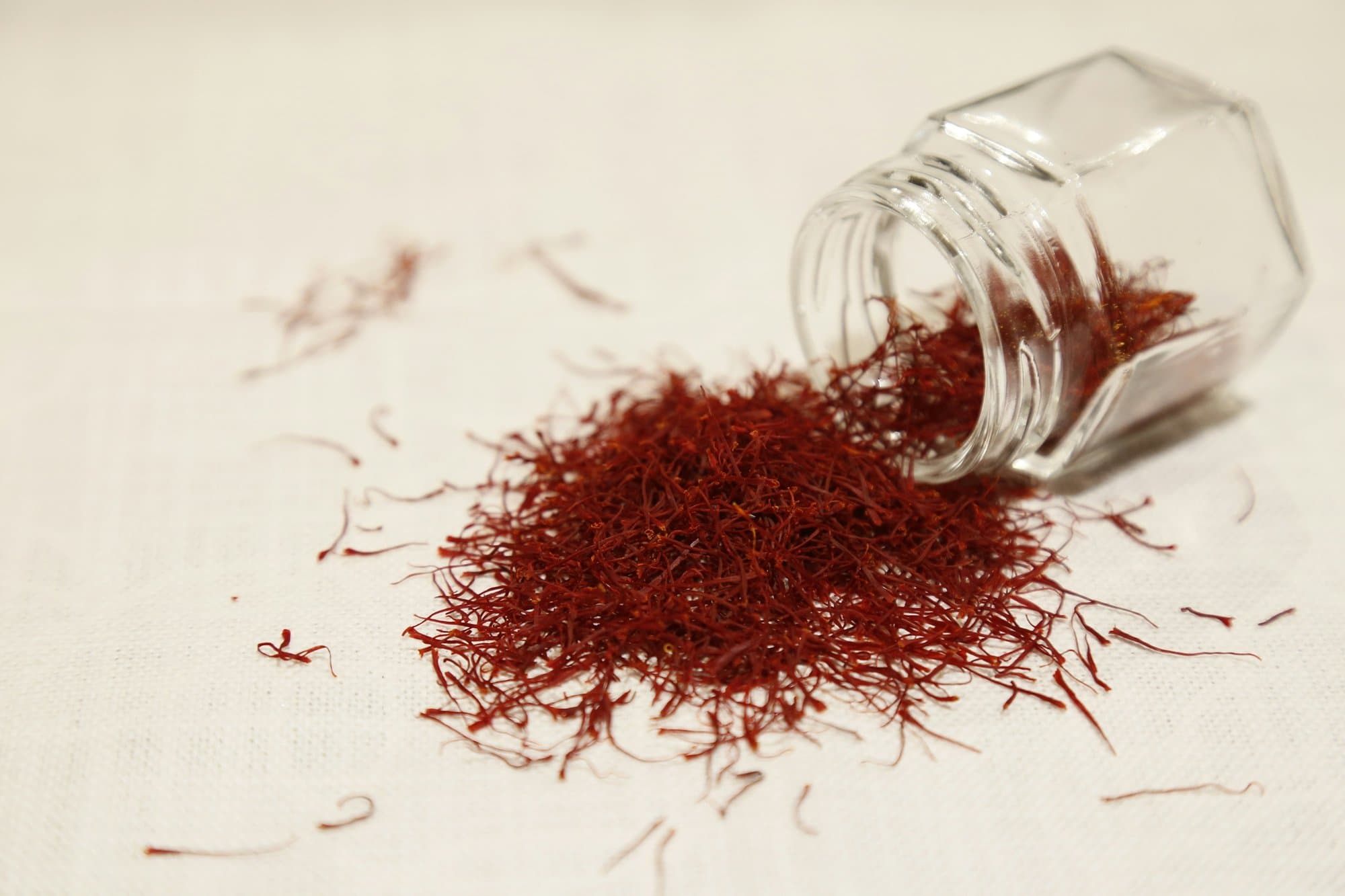
The dry threads go into glass jars with a lot number. With the number under the lid you can check on the site which field and which week the lot came from.
INSIDE ONE GRAM
Inside one gram
450
stigmas — from roughly 150 flowers, three from each. All of this work is done in ten days of November.